Milford Sound is less of a town stop and more of a full nature outing built around the water. Most visits revolve around one core choice: cruise-only if you’re already in Fiordland, or a bundled day trip from Queenstown or Te Anau if you want transport, timing, and scenic stops handled for you.
Plan Your Visit to Milford Sound
Milford Sound is not a town. There is a visitor terminal, a car park, a café, a lodge and an airstrip, and that is essentially it. Everything you came for happens on the water or on the road in.
Three things catch most visitors out. There is no fuel past Te Anau, 121 km away. Mobile coverage drops out well before you arrive and does not fully return. And parking at the terminal is paid and fills up in peak season, though there is a free alternative 1.3 km back down the road.
If you are on a coach day trip, none of this applies — you are dropped at the terminal and collected there.
How to visit Milford Sound
Overview
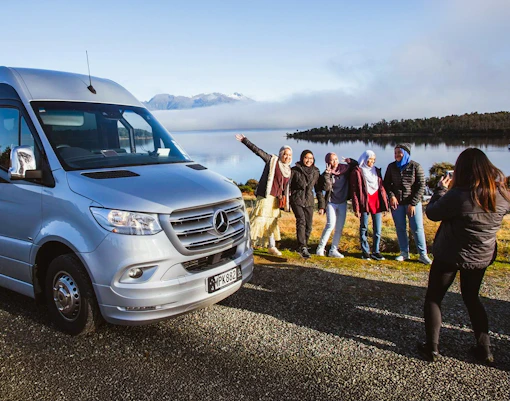
Travel logistics
Most travelers start from Queenstown or Te Anau. From Queenstown, a road-based day trip is long but straightforward, while Te Anau cuts driving time significantly and usually means earlier cruise slots and calmer pacing. Self-drivers need to factor in weather, mountain-road fatigue, and arriving at the terminal at least 20 minutes early for check-in. Guided options simplify the day because cruise timing, roadside stops, and boarding are already coordinated. If you’re short on time, scenic flight options from Queenstown reduce travel hours considerably.
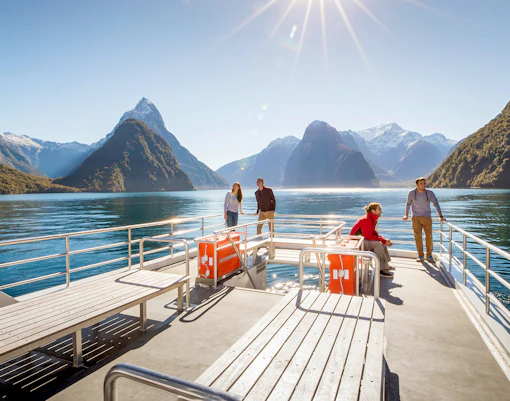
Plan your day
Quick visit (2–3 hrs): Cruise-only from Milford Sound terminal.
Half day (4–5 hrs): Cruise plus short stops if you’re staying nearby.
Full day (8+ hrs): Queenstown or Te Anau road trip with cruise, photo stops, and lunch.
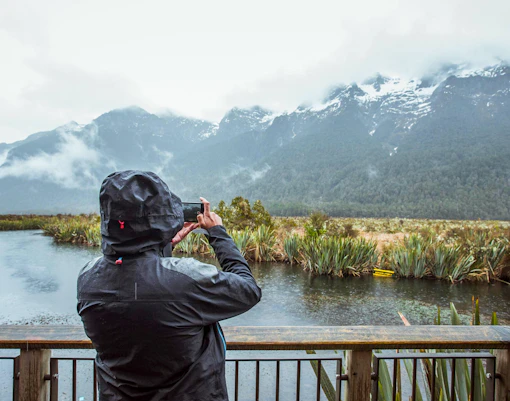
Handy tips
- Tickets: Peak-season departures and small-group cruises are best booked in advance.
- Best times: Morning departures usually feel quieter; rainy days bring stronger waterfalls.
- Rules: Bring waterproof layers and check accessibility details before booking.
- Pro tip: From Queenstown, guided transport is often easier than self-driving.
- Respect: Wildlife sightings are never guaranteed, so keep noise low on deck.
Must-see places in Milford Sound
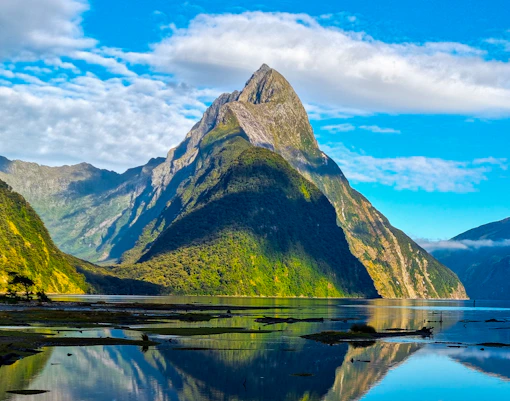
Mitre Peak
Milford’s signature landmark rises sharply above the fiord, creating the classic skyline shot and giving the whole cruise its sense of scale.
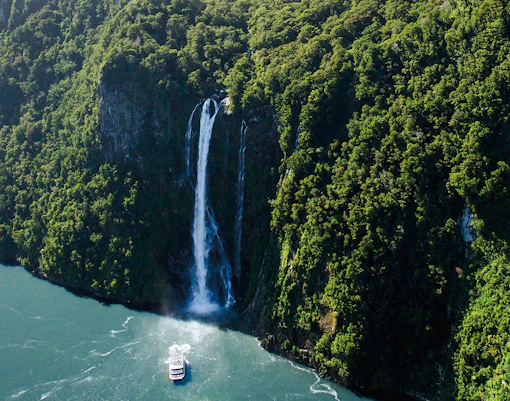
Stirling Falls
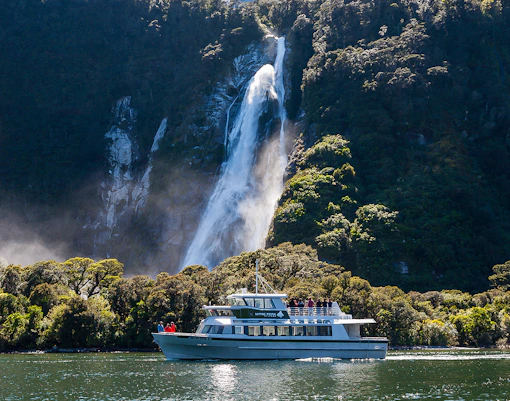
One of the best close-up moments on the water, where many boats edge near the cascade so you can feel the spray.
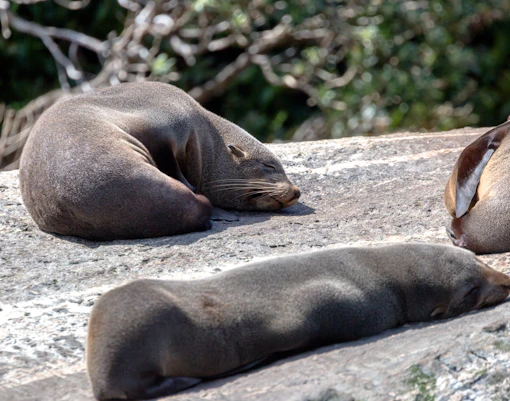
Seal rocks and dolphin waters
Keep your camera ready near exposed rocks and open water, where fur seals often rest and dolphins sometimes surf beside boats.
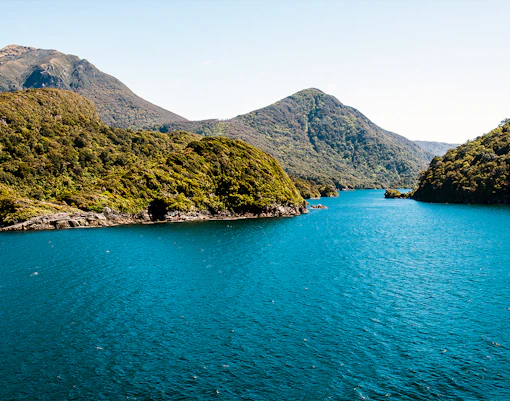
The outer fiord views
Cruises that go farther out reward you with broader views, steeper cliffs, and a stronger sense of Milford opening toward the Tasman Sea.
About the Milford Sound Visitor Terminal
All cruises depart from the Milford Sound Visitor Terminal at Freshwater Basin, at the head of the fiord. Coach drop-off, check-in desks, and boarding all happen here.
- What's there: Ticketing and check-in for all operators, toilets, a café, sheltered seating, and a covered walkway to the jetties. There is no supermarket, no fuel and no ATM.
- Check-in: Arrive at least 20 minutes before your sailing. Operators close boarding before departure and boats do not wait.
- Luggage: Most operators will hold bags during your cruise. Confirm with yours if you're arriving mid-journey rather than as a day trip.
- Connectivity: Limited. Download your voucher and any maps before you leave Te Anau rather than assuming you can retrieve them on arrival.
Accessibility for Milford Sound cruises
Accessibility varies significantly between vessels, so check before booking rather than on the day.
- Generally accessible: The larger multi-deck catamarans, which have level boarding, lifts between decks and accessible toilets. The visitor terminal itself is step-free with mobility parking adjacent.
- Often not accessible: Small-boat and boutique cruises, which board via gangway or steps and have limited deck space for wheelchairs.
- Strollers: Accepted on most larger vessels, usually folded during boarding.
- Transfers: Accessible coach options from Queenstown and Te Anau are limited and need arranging in advance.
If mobility access matters, contact us before booking and we'll confirm which vessels suit.
Getting to Milford Sound
Most visitors reach Milford Sound from Queenstown or Te Anau.
Direct transport and pre-arranged cruise timing make this the easiest option. It’s best if you want scenic stops without worrying about road conditions, parking, or a 12-hour self-drive day.
- Time: About 12–13 hrs round trip from Queenstown; about 8–9 hrs from Te Anau
- Cost: Coach-and-cruise packages are roughly NZD 189–249; premium and flight options cost more
- Pros: Low-stress, timed connections, scenic commentary, often includes lunch or hotel transfers
- Cons: Less flexible than driving yourself
Driving gives you full control over stops and cruise choice, but it’s a long day from Queenstown. It suits confident drivers, especially those already staying in Te Anau or combining a cruise with other Fiordland plans.
- Time: About 4–5 hrs each way from Queenstown; about 2 hrs each way from Te Anau
- Cost: Cruise-only tickets start around NZD 99; fuel and other road costs are extra
- Best for: Independent travelers, photographers, flexible schedules
- Cons: Long road time, weather exposure, and terminal arrival timing matters
- Milford Sound Public Car Park: The closest option, about 550 m from the visitor terminal on a sealed walking path. Paid parking, currently NZ$10 per hour before 3pm and NZ$5 per hour after. Overnight parking is permitted at a flat rate. Card payment at the machines; don't rely on cash.
- Deepwater Basin: Free, about 1.3 km from the terminal, roughly a 15 to 20 minute walk. Campervan spaces available. This is the default choice for anyone on a cruise-only ticket who doesn't mind the walk, and it rarely fills.
- The Chasm: Free, about 9.8 km back along the Milford Road. Not practical for reaching the terminal, but useful if you're combining the walk at The Chasm with your day. No overnight parking.
- Mobility parking: Designated spaces are available immediately adjacent to the visitor terminal.
- In January and February the public car park can be full by mid-morning. Arriving 45 minutes before your sailing rather than 20 gives you the margin to fall back to Deepwater Basin and still make check-in.
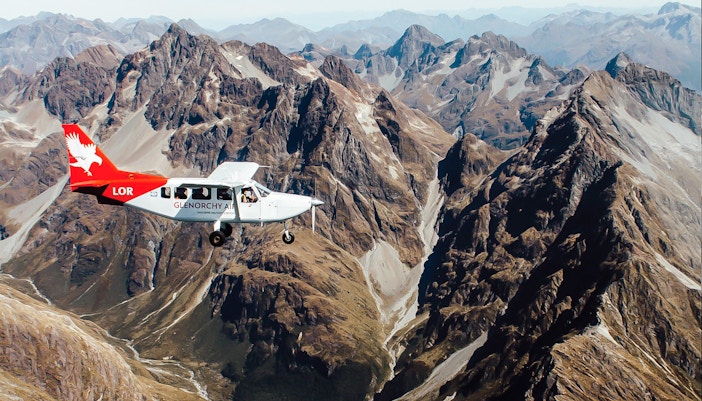
This is the fastest and most time-efficient way to experience Milford from Queenstown. It’s best for short stays, aerial views, or travelers who want the fiord without the full road journey.
- Time: About 35 minutes each way on selected fly-cruise products
- Cost: [Information unavailable]
- Best for: Short trips, premium travelers, aerial photography
- Cons: Weather-dependent, stricter baggage and weight rules on some products
How to get around in Milford Sound
Milford Sound is compact at the terminal, but everything meaningful is spread along the approach road or on the water.
The terminal area is manageable on foot, and boarding is usually a short walk from parking or coach drop-off. Walking works for the immediate foreshore and cruise check-in, not for exploring Fiordland broadly.
- Time: Usually 5–15 mins around the terminal
- Cost: Free
- Best for: Cruise check-in, quick lookouts, short pre-boarding walks
- Cons: Wet, windy weather and limited range beyond the terminal
For most visitors, this is the real in-destination transport system. Day tours handle the Milford Road stops, while the cruise itself is how you access the fiord’s main sights.
- Time: Included in your itinerary
- Cost: Included in guided products
- Pros: Efficient, coordinated, no parking stress
- Cons: Fixed schedule and less room for spontaneous detours
If you’re on a cruise-only ticket, your own car is the practical way to arrive. Once you’re there, though, the experience becomes mostly pedestrian plus boat-based.
- Time: Flexible
- Cost: Fuel and parking [To be verified]
- Best for: Cruise-only visitors and travelers staying closer to Milford
- Cons: Long driving day from Queenstown and limited flexibility once on site
Comfort tip: If you’re visiting from Queenstown for just 1 day, combine coach transfers with your cruise so you can enjoy the scenery instead of managing the road.
Weather and what to bring
| Month | Avg. high | Avg. low | Daylight duration |
|---|---|---|---|
Jan | 19°C | 10°C | ~15.5 h |
Feb | 19°C | 10°C | ~14 h |
Mar | 17°C | 9°C | ~13 h |
Apr | 15°C | 7°C | ~11.5 h |
May | 12°C | 5°C | ~10 h |
Jun | 10°C | 3°C | ~8.5 h |
Jul | 9°C | 2°C | ~8.5 h |
Aug | 11°C | 3°C | ~9.5 h |
Sep | 13°C | 5°C | ~11.5 h |
Oct | 14°C | 6°C | ~13 h |
Nov | 16°C | 7°C | ~14.5 h |
Dec | 18°C | 9°C | ~15.5 h |
More things to do in Milford Sound (if you have the time)
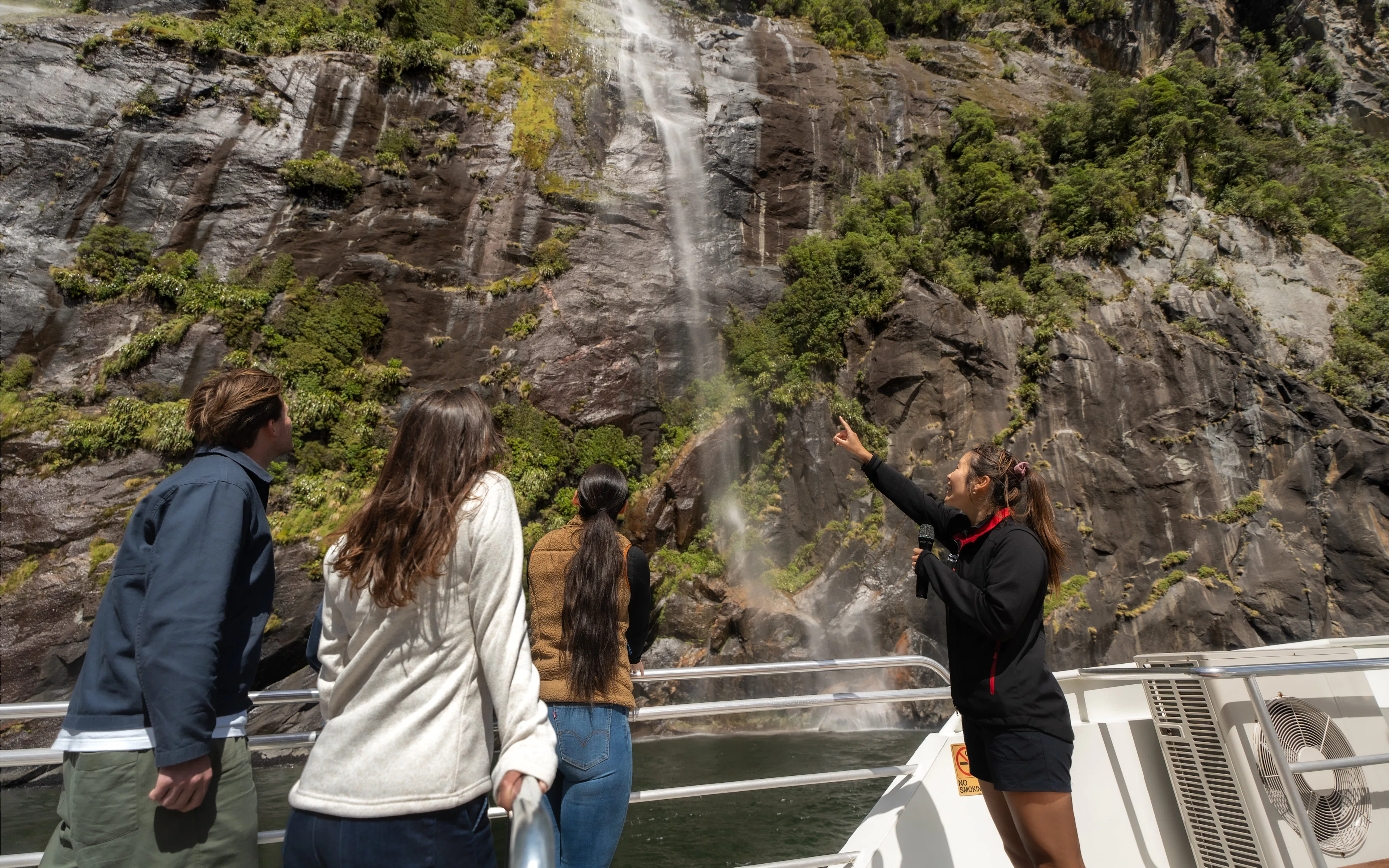
1/5
Milford Track Guided Walk & Boat Cruise
Adds a land-and-sea layer to your day, combining a boutique boat cruise with guided walking for travelers who want more than deck views.
Overnight Milford Sound Cruise with Dinner & Activities
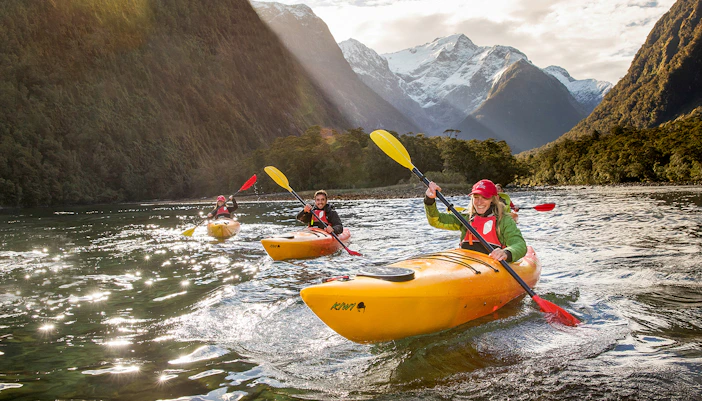
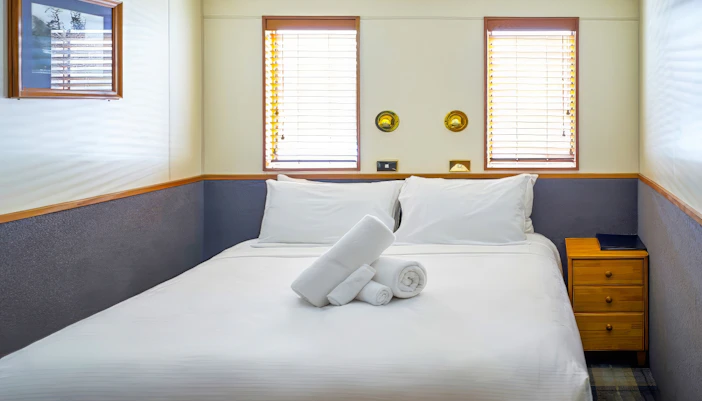
An after-hours fjord stay with dinner, breakfast, kayaking, and cabins — ideal if you’d rather trade a rushed day trip for slower scenery.
From Queenstown: 1.5 to 2-Hour Milford Sound Helicopter Tour
A fast aerial option with glacier or alpine touchdown, best if you want Milford’s scale from above and limited time on the ground.
From Queenstown: 4-Hour Milford Sound Helicopter Tour and Cruise
Combines a helicopter flight, landing, and cruise in 1 itinerary, making it a strong add-on for travelers skipping the long road journey.
From Manapouri: Doubtful Sound Wilderness Cruise
A quieter Fiordland alternative with Lake Manapouri and Wilmot Pass included, suited to travelers who’ve already done Milford or want a wilder mood.
Eating at Milford Sound
Milford Sound has one café and one restaurant. That is the entire food scene, and it catches people out — visitors routinely arrive assuming there will be somewhere to grab lunch after a cruise and find a queue at the only counter.
On the waterfront, a short walk from the visitor terminal. Barista coffee, light meals, sandwiches and grab-and-go options, plus souvenirs and the travel essentials people forget — insect repellent and rain jackets among them. Open daily, roughly 8am to 4pm in summer and 9am to 4pm in winter.
This is where most day visitors eat. It is busiest in the half hour before and after the main cruise departures, so if you are on a midday sailing, buy before you board rather than after you land.
The only restaurant in Milford Sound, about a minute's drive from the terminal car park at Milford Sound Lodge. Open for breakfast, lunch and dinner, with a menu built around South Island producers — Fiordland wild venison and crayfish are the signatures — plus a bar and an extensive local wine list. Lunch runs café-style with takeaway available; dinner is a full sit-down service, and there is a chef's tasting menu.
Expect to pay considerably more than a comparable meal elsewhere in New Zealand, which is what it costs to run a kitchen at the end of a 120 km road. Capacity is limited and it serves lodge guests as well as day visitors, so book ahead. Dinner realistically only works if you are staying the night, since driving the Milford Road back to Te Anau after dark is not something to take on casually.
Most vessels have a licensed café bar selling hot and cold food, and many include tea and coffee. Beyond that, what you get depends entirely on the product: some include a picnic lunch, some a buffet, the premium sailings add canapés and sparkling wine, and the overnight cruise includes a three-course dinner and a cooked breakfast. Check the inclusions on your Milford Sound cruise rather than assuming.
There is no café, no shop and no petrol station between Te Anau and Milford Sound — 121 km and about two hours of driving. The only food on the entire route is a vending machine at Knobs Flat, roughly halfway.
Knobs Flat is also where the last flush toilets are before you reach the fiord. Everything past it is long-drops at the DOC campsites.
If you are self-driving, buy lunch, snacks and water in Te Anau. There is also no ATM at Milford Sound, so bring a card and some cash.
Staying in Milford Sound
Milford Sound Lodge is the only accommodation inside the fiord. It offers riverside chalets with breakfast included, plus powered campervan sites, and it has the Pio Pio restaurant on site along with free parking for guests. Wi-fi exists but is weather-dependent and slow — treat the stay as a disconnection rather than a workday.
Staying here is the only way to be at the fiord before the first coaches arrive and after the last ones leave, which is a materially different experience from a day trip. It is also expensive and books out months ahead in summer.
Freedom camping is prohibited at Milford Sound. The only legal options are Milford Sound Lodge's campervan sites or the campsites along the Milford Road. There are several Department of Conservation campsites strung along State Highway 94 through the Eglinton Valley.
- Cascade Creek is the largest at around 120 sites, 71 km north of Te Anau, and the closest DOC site to Milford Sound at roughly 45 minutes to an hour away. It is the only one requiring advance online booking.
- Deer Flat, Totara and Walker Creek are smaller and quieter, and Henry Creek sits on the edge of Lake Te Anau. Most are first-come, first-served, cash only, with long-drop toilets and no showers. Campfires are permitted in designated fireplaces at several.
- Eglinton Valley Camp at Knobs Flat is the main private alternative, about halfway along the road. More facilities than the DOC sites — hot showers, camp kitchen, laundry — and simple studio cabins if you want a bed rather than a bunk.
Two warnings: Sandflies at the Milford Road campsites are significantly worse than in Te Anau; bring repellent and a head net if you are sensitive. And dogs are not permitted anywhere in Fiordland National Park, including inside a vehicle passing through, so a campervan trip with a dog is not an option on this road.
Most visitors base themselves in Te Anau, two hours and 121 km from the fiord. It has the widest range of accommodation from backpackers to lakefront lodges, the last supermarket, the last fuel and the last ATM before Milford, and a decent choice of restaurants for the night before.
Staying in Te Anau also shortens the day dramatically. A Te Anau day trip runs 8 to 9 hours against 12 to 13 from Queenstown, and it opens up the early cruise departures that self-drivers from Queenstown simply cannot reach.
Queenstown is 288 km away and works best if Milford is one stop in a broader South Island trip rather than the reason you came. You get far more choice of hotels, restaurants and nightlife, at the cost of a 12 to 13 hour day built around four-plus hours of driving in each direction.
- Staying at Milford Sound if you want the fiord without crowds, are booking an overnight cruise, or want dinner at Pio Pio.
- Te Anau if you are self-driving, want an early cruise slot, or want the shortest practical day trip.
- Cascade Creek or the Milford Road campsites if you are in a campervan and want to wake up an hour from the fiord.
- Queenstown if Milford is part of a wider itinerary and you would rather let a coach handle the road.
For property-level detail and booking, see Milford Sound accommodation.
Tips from locals
- Book the earliest slot you can: Morning sailings usually feel calmer, and road traffic builds later.
- Don’t fear the rain: Wet weather often makes the waterfalls more dramatic, not worse.
- Start from Te Anau if possible: You’ll cut driving time and usually have a more relaxed day.
- Choose a smaller boat for photos: Boutique cruises feel less crowded and often give better deck space.
- Always bring: A waterproof jacket with a hood, layers, closed shoes with grip, and insect repellent. Sandflies at the terminal and foreshore are persistent and the single most common complaint from visitors who came unprepared.
- Add in winter: Hat, gloves, and a warm mid-layer. Open decks in June are genuinely cold.
- Add in summer: Sunscreen and sunglasses. UV is strong even under cloud cover.
- Useful: a dry bag or waterproof phone case for deck photography, a refillable bottle, and a power bank.
Rules and etiquette
Milford Sound sits inside Fiordland National Park and the Piopiotahi Marine Reserve. Keep well clear of fur seals hauled out on rocks, never feed wildlife, and stay on formed tracks. Drone use requires a Department of Conservation permit and is not permitted around the terminal or from vessels. Take everything out with you.
Keep noise down on deck. Skippers cut engines at the waterfalls and near wildlife, and the quiet is much of the point.
Frequently asked questions about visiting Milford Sound
From Queenstown, expect about 12–13 hours. From Te Anau, most day trips take about 8–9 hours, while cruise-only options spend roughly 2 hours on the water.
Guided tours are easier from Queenstown because the road day is long. Self-driving works best if you’re staying closer, especially in Te Anau.
Usually, yes. Cruises operate in most weather conditions, and rainy days often mean stronger waterfalls, which many travelers actually prefer.
Small-boat cruises carry fewer people and feel more personal. Standard cruises usually offer more departure times, larger indoor lounges, and easier availability.
Often, yes. Fur seals are common, dolphins are regularly spotted, and penguins are possible, but all wildlife sightings are naturally never guaranteed.
Some cruise-only options can accommodate folding wheelchairs or strollers, but many small-boat tours, hikes, and long day trips are not fully accessible.
Book as early as you can for December to March, especially for premium, small-group, fly-cruise, and overnight options.
If you want fewer crowds and more time on the fiord, yes. Overnight trips add sunset, dinner, cabins, and early-morning stillness that day visitors miss.
There is one café near the visitor terminal and one restaurant, Pio Pio at Milford Sound Lodge. That is all. Most cruises sell food on board and several include lunch. There is nothing on the Milford Road itself except a vending machine at Knobs Flat, so stock up in Te Anau.
Yes. Milford Sound Lodge is the only accommodation in the fiord, offering chalets and campervan sites, and books out months ahead in summer. Overnight cruises are the other option. Otherwise most visitors stay in Te Anau, two hours away.
Freedom camping is prohibited. Legal camping means Milford Sound Lodge's campervan sites or the DOC campsites along the Milford Road, of which Cascade Creek is the largest and closest. Dogs are not permitted anywhere in Fiordland National Park, including inside vehicles.