- Size: Over 12,000 km², New Zealand's largest national park
- Established: 1952
- World Heritage: Part of Te Wāhipounamu – South West New Zealand, a World Heritage Area of about 26,000 km² spanning four national parks
- Fiords: 14, including Milford Sound/Piopiotahi, Doubtful Sound/Pātea and Dusky Sound
- Rainfall: Up to about 9 m a year in the wettest areas
- Gateway towns: Te Anau and Manapouri, just outside the park boundary
- Road access: One road into the heart of the park, the Milford Road (SH94) to Milford Sound. Most of the park is reachable only on foot, by boat or by air
- Visitor centre: Fiordland National Park Visitor Centre, Lakefront Drive, Te Anau
- Entry fee: None currently. See the 2026 updates below
Fiordland National Park Guide: Fiords, Walks & Wildlife
Fiordland National Park is New Zealand's largest national park, covering more than 12,000 km² of the South Island's south-west corner. Glaciers carved it into 14 fiords, deep lakes and sheer granite mountains, and it gets some of the highest rainfall on earth. It's home to Milford Sound and Doubtful Sound, three of New Zealand's Great Walks, and wildlife found almost nowhere else, from kea to the takahē. Most of the park has no roads at all. Established in 1952, it forms the heart of Te Wāhipounamu, the South West New Zealand World Heritage Area.
Fiordland National Park at a glance

Fiordland National Park's must-visit sights

Milford Sound
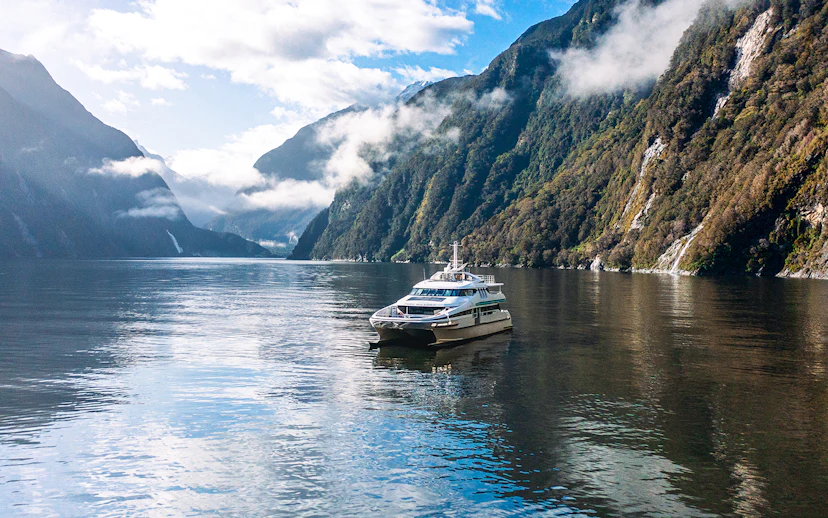
Majestic glacial fiord carved by ancient ice, boasting towering waterfalls, lush rainforest clinging to cliffs, and resident fur seals basking on rocks. Cruising its serene waters and hiking its hidden trails offer unmatched beauty and wildlife encounters.


The best things to do in Fiordland National Park
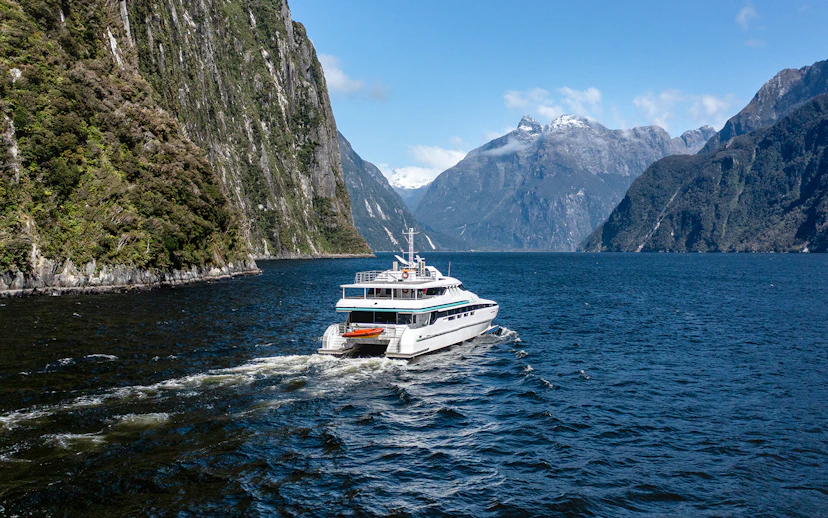
Cruise Milford Sound
Fiordland's most famous fiord, and the only one you can drive to. A cruise of about two hours runs the full 16 km to the Tasman Sea, passing Mitre Peak, Lady Bowen and Stirling Falls, seal colonies and, often, dolphins.
Cruise Doubtful Sound
This fiord is around three times longer than Milford Sound and far quieter, reached only by a boat across Lake Manapouri and a coach over Wilmot Pass. Day cruises and overnight cruises both run.
Walk a Great Walk
Three of New Zealand's Great Walks start in Fiordland:
- Milford Track: A four-day, 53.5 km classic from Lake Te Anau to Milford Sound. Huts sell out within minutes of bookings opening in May, but you can walk its final section as a day trip. Milford Track guide
- Kepler Track: A loop from the edge of Te Anau over alpine ridgelines above Lake Te Anau and Lake Manapouri.
- Routeburn Track: Shared with Mount Aspiring National Park, starting at The Divide on the Milford Road.
The newest Great Walk, the Hump Ridge Track, is on the park's southern edge, near Tuatapere.
Take a scenic flight
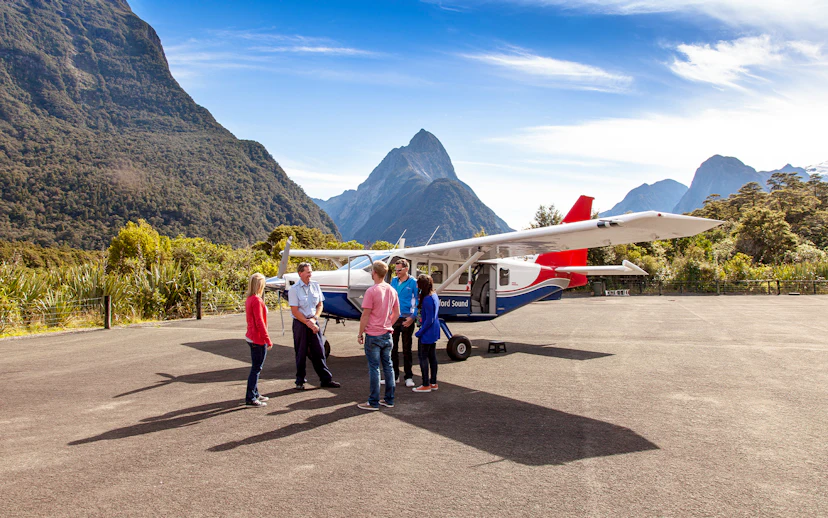
From Queenstown or Te Anau, flights cross glaciers, alpine lakes and waterfalls you can't see from any road. Many land at Milford Sound for a cruise.
Drive the Milford Road
The 120 km road from Te Anau to Milford Sound runs through the Eglinton Valley, past Mirror Lakes and Lake Gunn, over The Divide and through the Homer Tunnel. It's one of the world's great scenic drives.
Visit the Te Anau glowworm caves
A boat across Lake Te Anau leads into limestone caves, where an underground river runs beneath glowworms.
Plan your visit to Fiordland National Park

Fiordland is one of the wettest inhabited places on earth. Rain can fall on any day, and it's what makes the park: hundreds of temporary waterfalls, rushing rivers and lush rainforest.
- Summer (Dec–Feb): Warm (18–20°C), long days, best for hiking and kayaking — also peak season.
- Autumn (Mar–May): Fewer crowds, golden landscapes, calm conditions for kayaking.
- Winter (Jun–Aug): Snowy peaks, quiet trails, chance of Southern Lights — but some tracks may close.
- Spring (Sep–Nov): Waterfalls at full force, wildflowers, great wildlife viewing.

Address: Fiordland National Park, Southland, New Zealand 9600
- Closest towns: Te Anau & Manapouri (best bases for exploring)
- Driving routes: See maps & routes for journeys from Queenstown and Te Anau
- Transport options: Coach, flight, or self-drive, see our directions guide for details
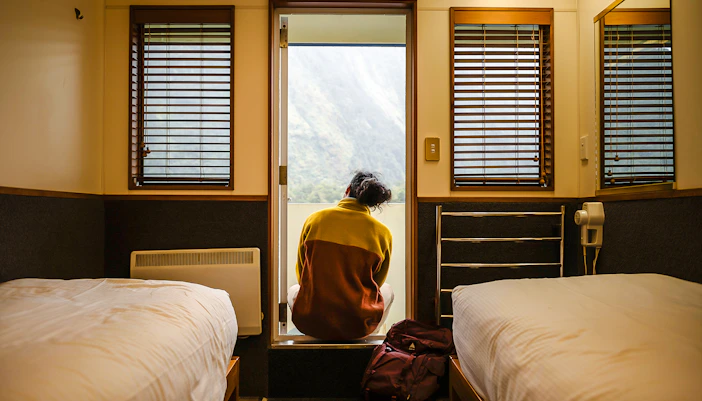
- Where to stay: Overnight in Milford Sound or Te Anau/Queenstown accommodation

- Cruise a fjord: Sail through Milford Sound or Doubtful Sound, spotting waterfalls and wildlife.
- Go hiking: Walk iconic tracks like the Milford Track or opt for guided day hikes.
- Take a scenic flight: From Queenstown or Te Anau for bird’s-eye views of fjords, glaciers, and peaks.
- Explore glowworm caves: Cruise Lake Te Anau to see limestone caves glowing with thousands of tiny lights.
- Paddle or dive: Kayak fjord waters or scuba dive among rare black coral forests.
- Cycle lakeside trails: Easy-grade routes around Te Anau and Manapouri, with bike rentals available.

- Māori heritage: Early Māori used Fiordland for hunting and fishing.
- 1952: Declared a national park.
- 1986: Recognized as part of the Te Wāhipounamu UNESCO World Heritage Site.
- Geology: Formed by Ice Age glaciers; today, valleys, lakes, and fjords reveal layers of sandstone, limestone, and ancient metamorphic rock.

- Dogs: Not allowed in the national park.
- Drones: Recreational and commercial drone use needs DOC permission.
- Camping: Only at designated DOC campsites and huts. There's no freedom camping inside the park.
- Wildlife: Don't feed kea or any other wildlife.
- Rubbish: Carry out everything you carry in.
- Freshwater pests: Didymo is present in some lakes. Check, Clean and Dry your gear between waterways.
- Safety: Check DOC track alerts and the weather before heading out. Rivers can rise fast after rain.
Fiordland National Park: 2026 updates
- International visitor fee (coming): The Conservation Amendment Bill, introduced on 7 May 2026, would allow international visitors to be charged to enter Milford Sound, among other sites. The earliest a charge could start is summer 2027, and there's no fee today.
- Milford Track 2026/27: The Great Walks season runs 1 November 2026 – 30 April 2027. Huts mostly sold out within 30 minutes of bookings opening on 13 May.
- Milford Road closures: Storms and spring avalanche control closed SH94 several times in August and September 2026.
- Milford Sound underwater observatory: This has been closed since storm damage in September 2024. Latest update
- Bowen Falls Walk: This is now permanently closed.
Wildlife in Fiordland National Park

Fiordland's isolation has made it a refuge for species that are rare or gone elsewhere.
- Kea: The world's only alpine parrot, curious and bold around the Milford Road, Homer Tunnel and huts. Don't feed them.
- Takahē: A large, flightless bird once thought extinct, rediscovered in Fiordland's Murchison Mountains in 1948.
- Fiordland crested penguin (tawaki): One of the world's rarest penguins, breeding along the coast mainly from about August to November.
- Whio (blue duck): An endangered river duck of fast, clear mountain streams.
- Bottlenose dolphins: Resident pods live in Doubtful Sound and visit Milford Sound often.
- New Zealand fur seals: Common on rocky shores, including Seal Rock in Milford Sound.
- Forest birds: Tūī, bellbirds, fantails, tomtits, robins and weka along many tracks.
Conservation projects across the park, from predator control in the Sinbad Gully beneath Mitre Peak to island sanctuaries, protect these species. Visitors play a part too: keep your distance, follow the Check, Clean, Dry rules between waterways, and never feed wildlife.
Frequently asked questions about Fiordland National Park
Fiordland National Park is a UNESCO World Heritage Site and a vast national park, encapsulating lakes, rainforests, waterfalls, mountain ranges, and more.
Yes, Milford Sound is located within the Fiordland National Park so you can easily access the park.
Fiordland National Park is one of the most scenic regions in the world, with unique fjords, waterfalls, hiking trails, lakes, and numerous activities to keep you busy!
There is no dearth of activities to embark on in the National Park. You can kayak on the fjords, scuba dive, cycle or hike along the trails, take a cruise, or enjoy a scenic flight.
The Fiordland National Park was established in 1952.
Fiordland National Park is huge and has numerous landmarks such as Milford Sound, Mitre Peak, Doubtful Sound, Kepler Trail, Dapper Mountains, and more.
Fiordland National Park is open from 8:30 AM to 5 PM on most days.
Fiordland National Park is located in the southwest corner of the South Island of New Zealand.
Yes, entry to Fiordland National Park is accessible to those in a wheelchair, however, certain activities such as the Milford Cruise or the Guided Walk along Milford Track may not be accessible.
Yes, you are free to carry your cell phones to capture those stunning photos, however, the use of drones for commercial or recreational purposes requires special permission.
It is advisable to always carry waterproof clothing while visiting the Fiordland National Park as the region is notorious for its untimely rains.